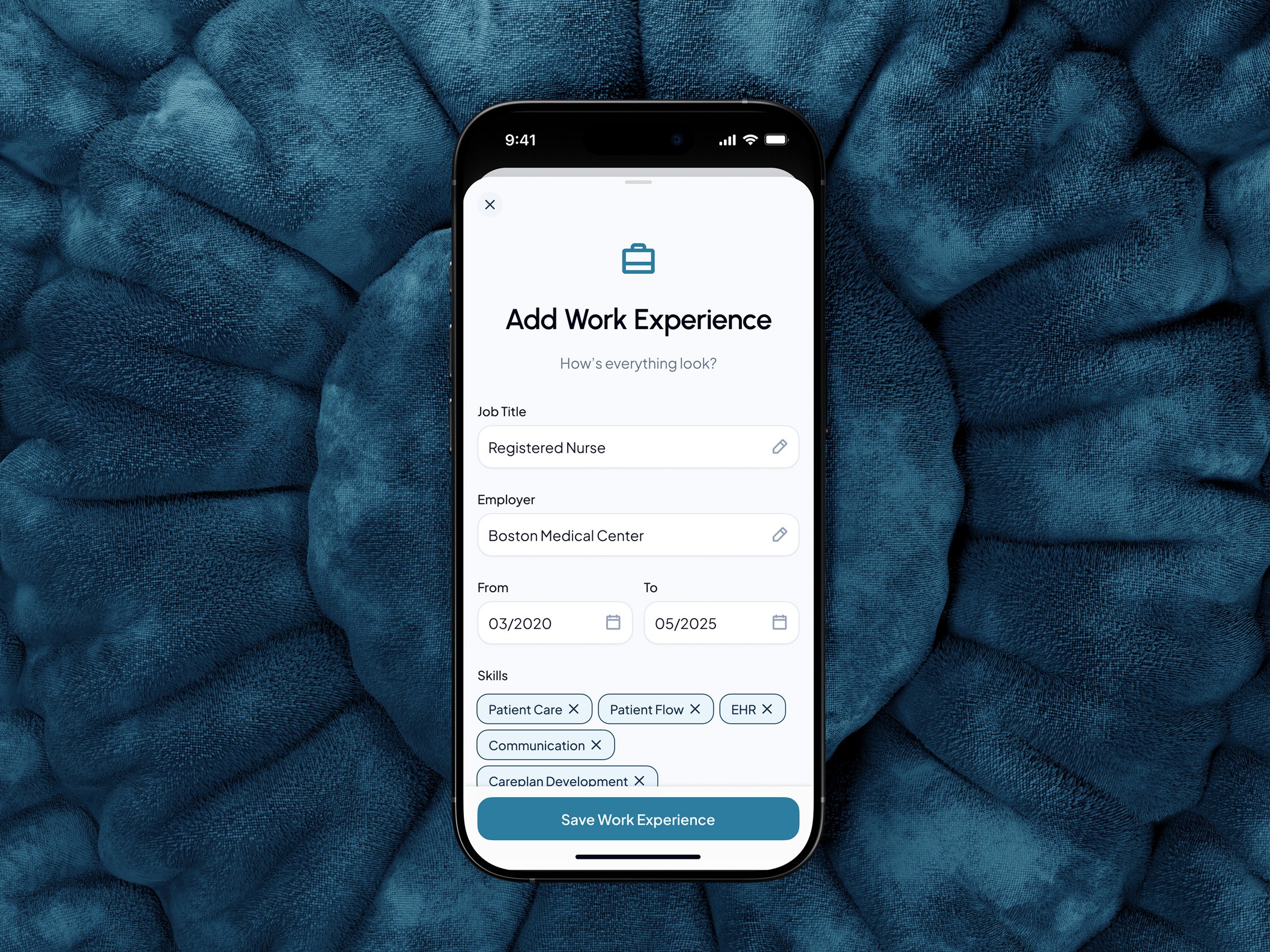
CareLoop — Scheduling & Care Management
CareLoop — Scheduling & Care Management
CareLoop is a multi-sided home healthcare platform connecting caregivers and families. This case study focuses on the Scheduling & Care Management experience, designed to help families coordinate ongoing care, track visits, and manage care plans while giving caregivers structure and clarity after booking.
Year
2026
Client
CareLoop
Service
UX/UI Design
Role
Lead UX/UI Designer
01
Project Goals
Create a Centralized “My Care” Management Hub
Objective: Provide families and caregivers with a single place to manage ongoing care after booking.
Success Metric: Reduce confusion and improve engagement with active care plans.
Sub-Goals:
Surface upcoming visits and active bookings in one dashboard.
Provide quick access to care plans and visit details.
Display caregiver and careseeker context within each booking.
Enable real-time updates without leaving the dashboard.
Improve Scheduling Clarity for Ongoing Care
Objective: Help users easily understand upcoming visits, availability, and care schedules.
Success Metric: Reduce scheduling conflicts and missed visits.
Sub-Goals:
Display upcoming visits in chronological order.
Highlight confirmed versus pending visits.
Allow editing of recurring care schedules.
Provide clear status indicators for each booking.
Enable Flexible Care Plan Management
Objective: Allow families to update care needs over time without restarting the booking process.
Success Metric: Increase care plan updates without support intervention.
Sub-Goals:
Allow editing of care instructions and preferences.
Support updates to care frequency and duration.
Maintain version clarity for caregivers.
Ensure updates sync across both users.
Provide Structured Visit Tracking for Caregivers
Objective: Give caregivers a clear workflow for each scheduled visit.
Success Metric: Improve visit completion consistency.
Sub-Goals:
Show visit checklist and expectations.
Allow caregivers to log start and end times.
Enable note and photo uploads.
Surface visit completion status.
Support Documentation and Incident Reporting
Objective: Provide transparency and accountability during ongoing care.
Success Metric: Increase documentation consistency across visits.
Sub-Goals:
Allow caregivers to submit visit notes.
Enable photo documentation when appropriate.
Provide structured incident reporting flow.
Surface reports to families in real time.
02
Research and Discovery
The design process focused on understanding how families and caregivers manage ongoing care after booking. The goal was to reduce confusion, improve scheduling clarity, and create structure for repeat visits and care coordination.
Competitive Analysis
I evaluated platforms across adjacent categories to identify patterns and gaps in caregiver discovery and matching.
Caregiving Marketplaces:
Most platforms focus heavily on discovery and booking but provide limited tools for managing ongoing care.
Visit tracking and documentation are often handled outside the platform.
Families lack visibility into daily care updates.
Healthcare Coordination Tools:
Clinical platforms provide strong documentation but are overly complex for family use.
Interfaces prioritize compliance over usability.
Limited integration with scheduling and caregiver workflows.
Scheduling Applications:
Calendar-based tools show visits but lack care-specific context.
No support for notes, care plans, or visit-level reporting.
Communication is disconnected from scheduling.
Key User Types
Families managing recurring or long-term care.
Adult children coordinating care remotely.
Caregivers needing structured visit expectations.
Users requiring transparency and accountability.
User Interviews and Stakeholder Input
Insights were gathered through stakeholder discussions and flow reviews focused on post-booking coordination.
Key findings included:
Families want visibility into what happens during each visit.
Caregivers need structure and clear visit expectations.
Scheduling confusion increases with recurring care.
Documentation builds trust and reduces follow-up questions.
Journey Mapping
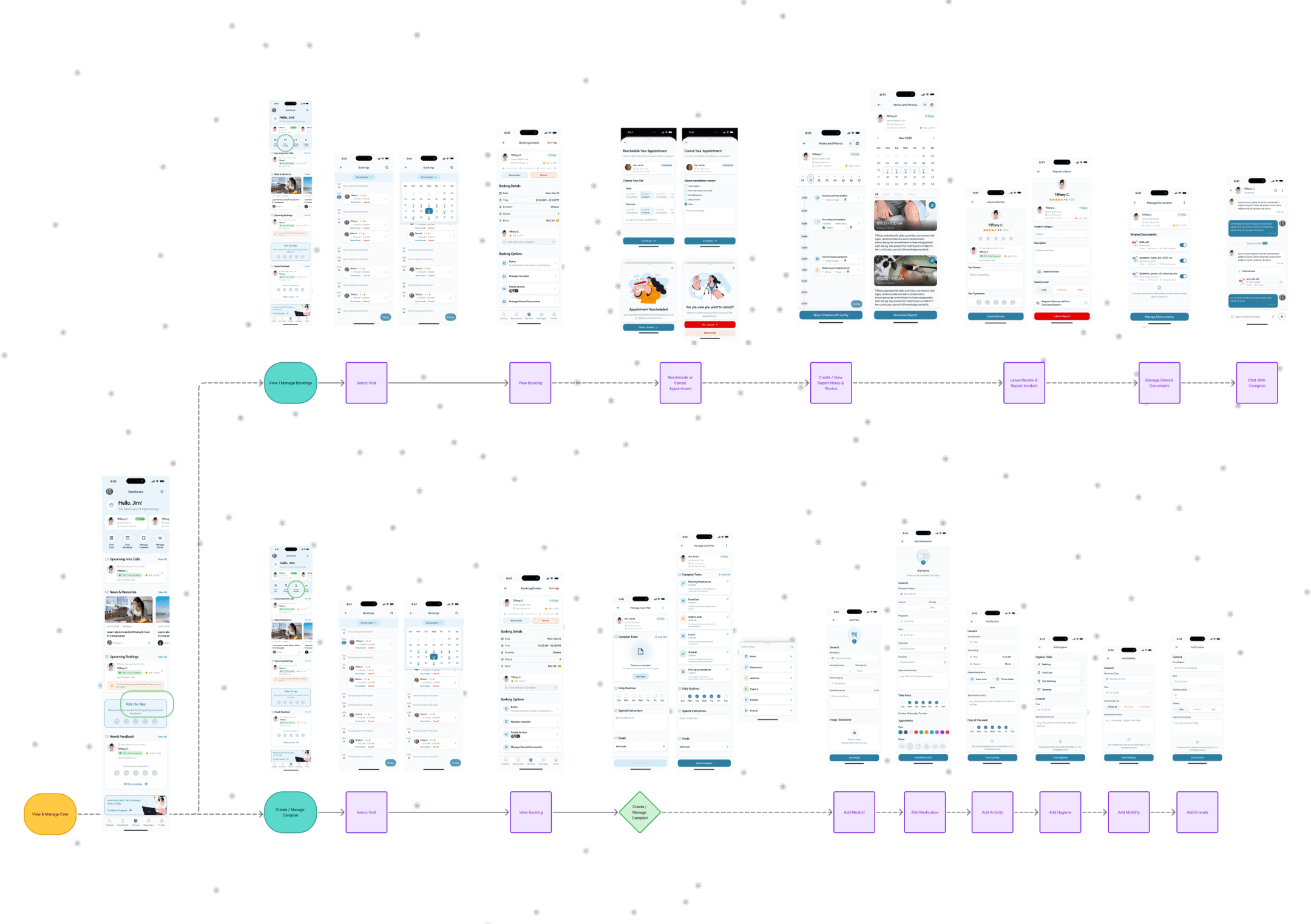
I mapped the lifecycle from booking confirmation through ongoing care management.
Key journeys included:
Viewing upcoming visits in the dashboard.
Editing care plans and visit details.
Tracking visit completion.
Submitting notes, photos, and reports.
This process surfaced friction primarily around fragmented scheduling, lack of documentation, and unclear visit expectations, which informed the decision to create a centralized “My Care” management experience.
03
Key Findings
Ongoing care lacks visibility for families:
After booking, families often have limited insight into what happens during each visit. This creates uncertainty and increases the need for manual follow-ups.
Caregivers need structured visit workflows:
Without clear expectations, caregivers rely on memory or external notes, leading to inconsistent care delivery. Structured visit tracking improves consistency and accountability.
Scheduling becomes complex with recurring care:
Managing multiple upcoming visits, edits, and changes creates confusion. Users need a centralized view to understand upcoming care at a glance.
04
Wireframing and Prototyping
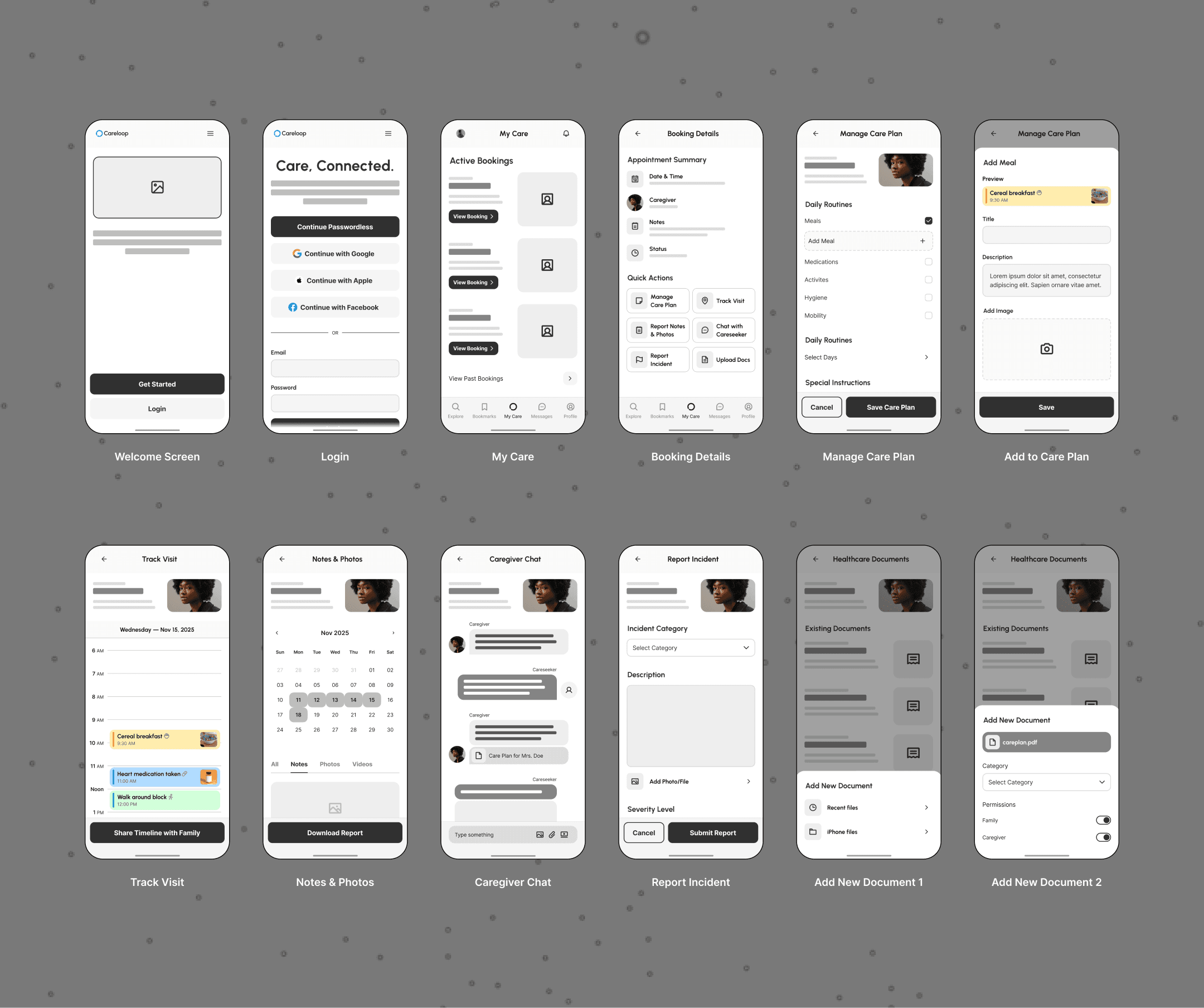
Lo-Fi Sketches (Paper and Figma):
Mapped the post-booking lifecycle including upcoming visits, care plan management, and visit documentation.
Explored dashboard layouts prioritizing upcoming care and quick actions.
Tested different visit card structures to balance scheduling clarity with care context.
Iterated on caregiver visit workflows for notes, photos, and incident reporting.
Mid-Fi Figma Prototypes:
Built clickable flows for:
My Care Dashboard → Visit Details → Care Plan Editing
Upcoming Visit → Start Visit → Notes & Photo Upload
Visit Completion → Report Submission → Confirmation
Incident Reporting → Structured Form → Submission
Tested variations of visit cards, timeline views, and care plan editing interfaces.
Internal reviews validated that a centralized dashboard improved scheduling clarity.
Refined visit-level actions to reduce caregiver friction during active care.
Hi-Fi Interactive Prototypes:
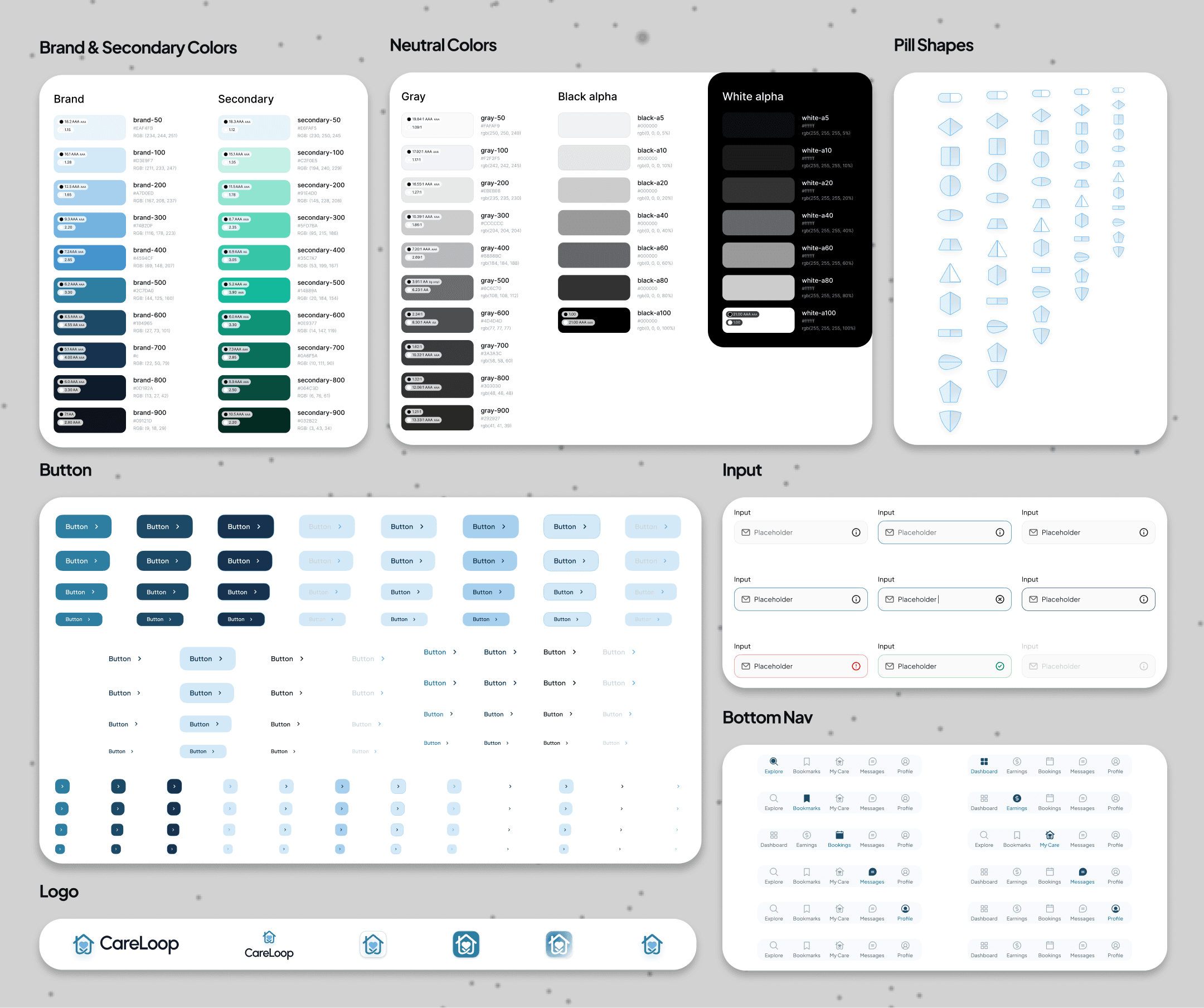
Applied CareLoop visual system with emphasis on clarity and hierarchy.
Introduced structured visit tracking components and status indicators.
Simulated recurring visits, schedule edits, and care updates.
Prototyped documentation flows including notes, photos, and reports.
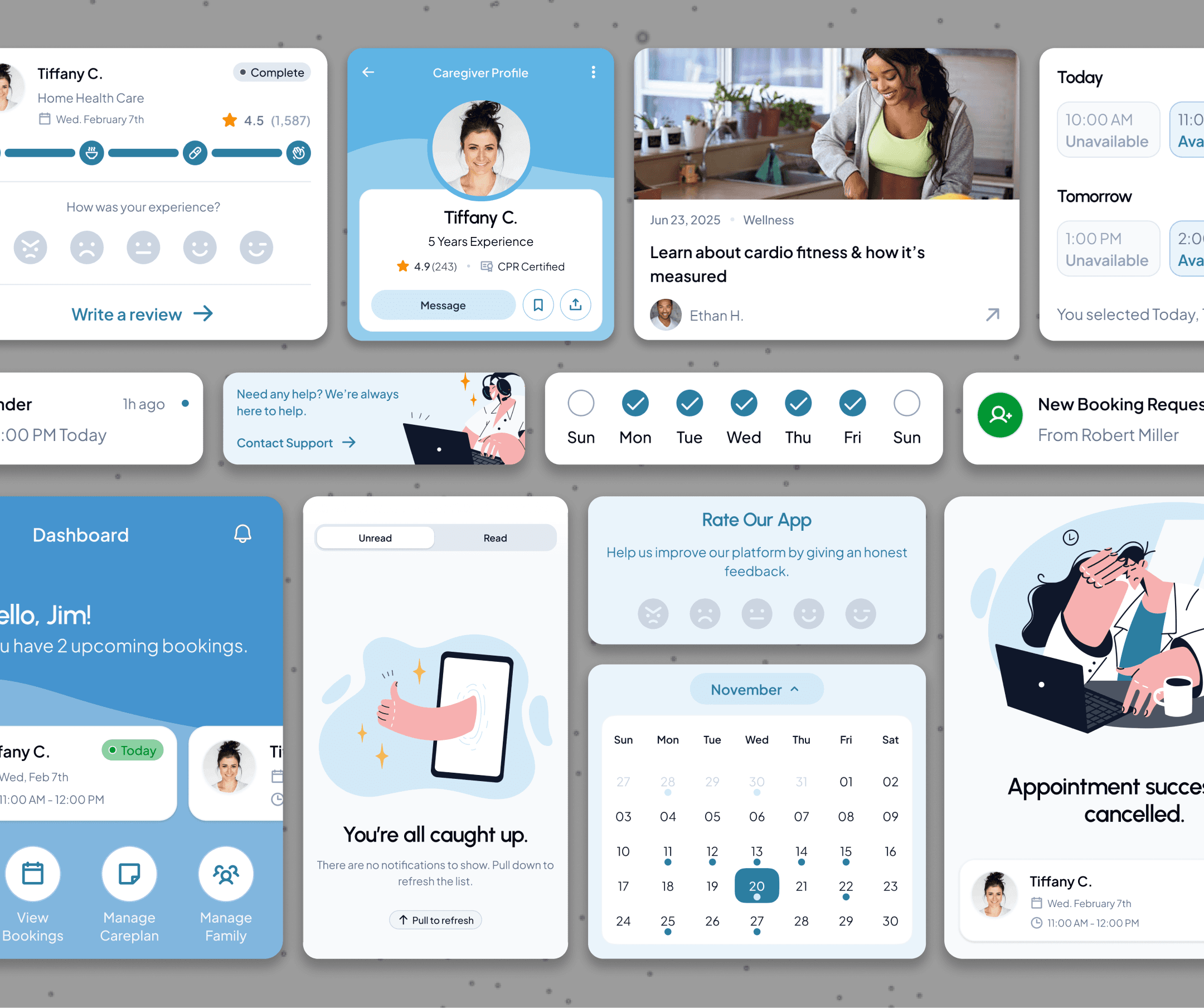
Design System Development:
Extended reusable components for care management workflows.
Core components included:
My Care dashboard cards
Visit status indicators
Care plan editing panels
Visit documentation modules
Incident reporting forms
Defined hierarchy for upcoming visits versus completed visits.
Created reusable patterns for visit tracking and documentation.
Ensured consistency across careseeker and caregiver views.
05
Key Features
Centralized Care Visibility:
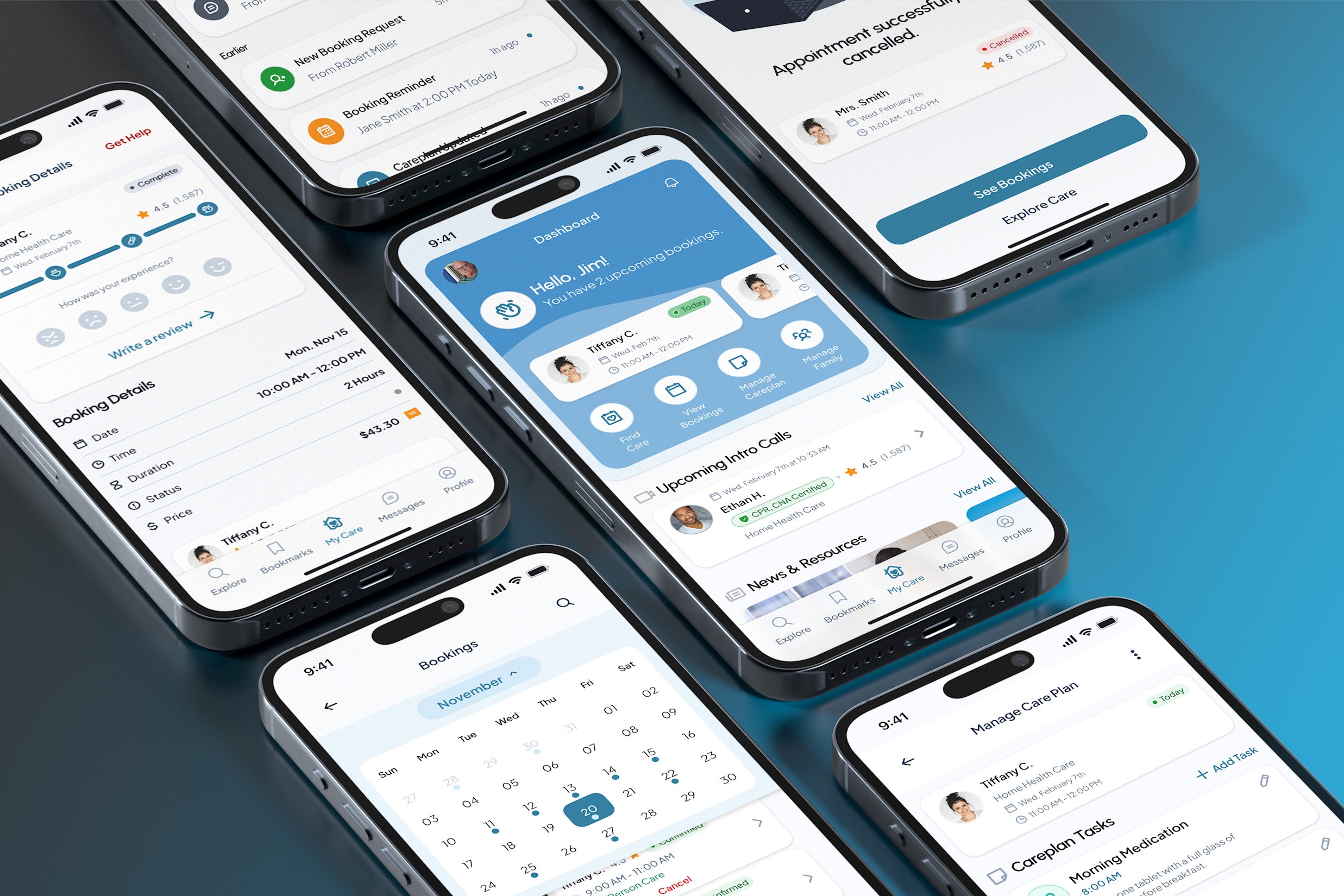
The My Care dashboard surfaces active bookings, upcoming visits, and caregiver details in one unified view. Key care information is prioritized in the visual hierarchy, allowing families and caregivers to quickly understand current care status without navigating multiple screens. This reduces coordination overhead and improves ongoing care transparency.
Upcoming Visit Management:
Scheduled visits are displayed with clear timing, status indicators, and quick-access actions. Users can easily review upcoming care, adjust details, or access visit-specific information. This structured scheduling view helps prevent confusion and supports consistent care planning.
Care Plan & Visit Actions:
The dashboard provides direct access to care plan updates, visit tracking, and documentation tools. Quick actions allow caregivers to start visits, log notes, and upload updates while families can monitor progress. Centralizing these interactions improves workflow efficiency and reduces friction during active care.
Lifecycle-Based Care Tracking:
Care is organized by lifecycle stages including upcoming, active, and completed visits. This structured timeline provides clarity across the full care journey, enabling both caregivers and families to track progress and maintain continuity over time.
Editable Care Plan Management:
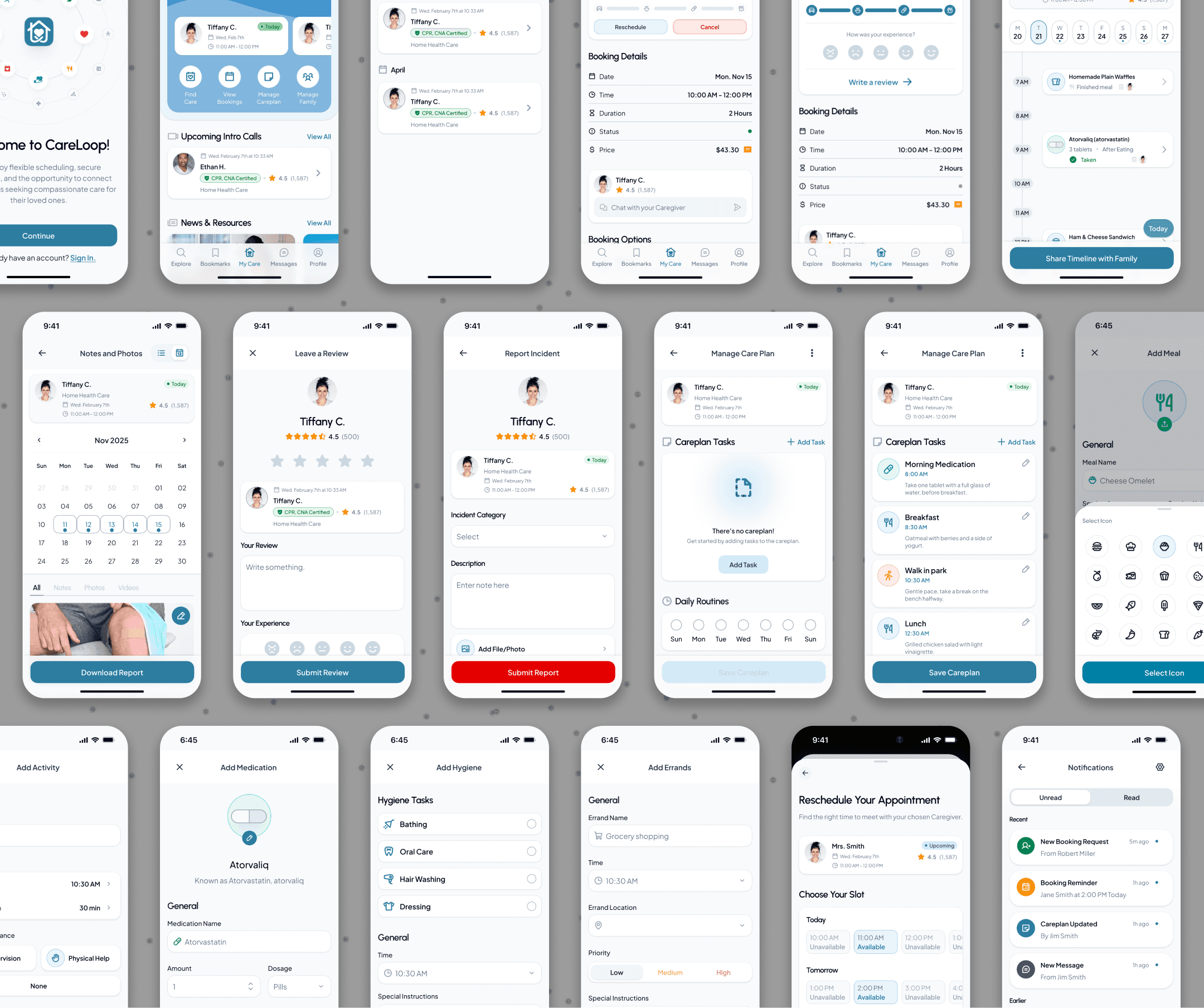
The care plan interface allows families to define and update care needs in a structured format. Key details such as responsibilities, preferences, and special instructions are clearly organized, ensuring caregivers understand expectations before each visit. This reduces ambiguity and supports consistent care delivery.
Structured Task & Responsibility Breakdown:
Care requirements are segmented into actionable items that caregivers can easily follow. Clear task groupings help standardize care routines while maintaining flexibility for individual needs. This improves accountability and ensures critical care instructions are not overlooked.
Real-Time Care Plan Updates:
Updates to the care plan are reflected immediately across upcoming visits, keeping caregivers aligned with the latest requirements. This dynamic approach prevents outdated instructions and supports evolving care needs without disrupting scheduled visits.
Care Continuity Across Visits:
The care plan persists across the entire care lifecycle, serving as a consistent reference point for both families and caregivers. Centralizing care instructions improves communication, reduces repetitive explanations, and ensures continuity throughout ongoing care.
Centralized Family Member Profiles:
The family management interface allows users to add and manage multiple care recipients within a single account. Each family member has dedicated care details, preferences, and requirements, ensuring caregivers clearly understand who they are supporting. This reduces confusion when coordinating care across multiple individuals.
Individualized Care Context:
Each family member profile contains specific care needs, notes, and relevant information tied directly to bookings and care plans. This structured separation prevents overlapping instructions and ensures caregivers receive accurate, person-specific guidance during visits.
Flexible Family Member Management:
Users can easily add, edit, or update family member information as care needs evolve. This flexibility supports households managing care for multiple individuals and allows quick adjustments without disrupting existing bookings or care workflows.
Care Coordination Across Members:
Linking family members to bookings and care plans enables clearer coordination across the entire care lifecycle. This structure improves communication, maintains continuity, and ensures caregivers have the right context for each visit.
Next
CareLoop is a multi-sided home healthcare platform connecting caregivers, families, and care operations. This case study focuses on the Caregiver Onboarding & Verification flow, designed to establish trust, prevent credential misrepresentation, and scale safely within a regulated healthcare environment.